
News
The Complete Garden Gate Buyer's Guide
Finding the best garden gate for your home is a great feeling, but getting to that point isn’t as simple as it might seem.
With so many materials, sizes, and styles to consider, it's easy to not know where to start. Don't worry, though. Our experts have pulled together everything you need to know in one place, so you can stop second-guessing and start shopping.
What do I need to consider before buying a garden gate?
Before you start browsing our garden gates, it’s important to get an idea of what you’re actually looking for. There are a few key things that you’ll want to consider.

Functionality and access
First, think about what you need your gate to do. Are you keeping pets and children safely contained, securing valuable tools, or just adding a boundary to your garden?
Once you've nailed down the purpose, you can also think about practicalities like swing direction. If your garden opens onto a public pathway or road, for example, your gate should always swing inward rather than outward.
Materials and maintenance
You’ll also need to decide which type of material best suits your home and your needs. Here at Stellar Gates, we offer a range of hardwood and softwood gates, and we’ll get into deciding which one suits you and your home best later on in this guide.
Hardware and security
A garden gate is only as good as its fittings, and here at Stellar Gates we offer premium gate ironmongery that’s built to stand the test of time.
If you’re looking to keep things simple, check out our gate ironmongery kits, which come with everything you need for a stress-free installation in one convenient package.
Legal restrictions
In the UK, garden gates usually fall under permitted development rights, which means that you won’t usually need planning permission.
However, you will need to apply if your gate exceeds 1 metre in height (if next to a road, footpath, or public right of way) or 2 metres in height anywhere else, so it's well worth keeping your gate measurements in mind before making a purchase.
What material is best for a garden gate?
The material that you choose really depends on what you’re looking for from your gate.
Our hardwood gates are made using premium Iroko timber. Nicknamed ‘African Teak’, Iroko is actually more resilient to the elements than the much-loved traditional oak, withstanding the challenges of British weather, from heavy rain to strong UV rays - making them a great investment for your home.
Our softwood gates, on the other hand, are made with sustainable Scandinavian Redwood, a durable and cost-effective option with a unique look. Easy on the eye and resistant to decay, Scandinavian Redwood is the perfect all-rounder for the everyday garden gate, no matter what size or style you need.

So what’s the difference?
While Scandinavian Redwood is a strong quality softwood, it is not as durable as Iroko, and it will need a bit more maintenance over time to keep it looking its very best. Our Iroko gates are better for those wanting a premium gate with a longer lifespan and less ongoing upkeep, whereas our Scandinavian Redwood gates are better suited to those wanting a quality gate at a lower initial price who are happy to carry out that extra bit of maintenance.
What size garden gate do I need?
Getting the right measurements is essential before placing your order. Here's how to calculate your gate size while also making the necessary deductions for posts and fitting gaps.
Garden gate width
If the width at the top and bottom of your opening are not the same, always use the smallest measurement. Deduct 30mm from the total opening width to allow a 15mm fitting gap on each side. If you are ordering gate posts, also deduct 45mm per post from your overall brick-to-brick measurement (two gate posts = 90mm in total).
Example: For a side gate with a brick-to-brick opening of 970mm, requiring two wall posts: 970 − 90 − 30 = 850mm
Garden gate height
Order the gate height from the bottom of the gate to the top of the horns at the side. We recommend leaving a 30mm gap below the gate during installation.
We're always here to help if you'd like us to check your measurements. Just get in touch by phone or email and we'll be happy to assist.
How much does the average garden gate cost?
Here at Stellar Gates, the cost of a garden gate varies depending on size, material, and design. Softwood garden gates range from roughly £250 to £450, while hardwood options start at around £450 and can go beyond £800 for larger or more intricate designs.
One thing worth keeping in mind is that the gate itself isn't the only cost to factor in. You may also want to budget for gate ironmongery, gate posts, and any finishing treatments, especially if you go for a softwood gate that needs some extra upkeep.

Frequently asked questions
Still weighing up your options? We've pulled together some of the most common questions we hear from customers to help you make the right choice. From installation advice to maintenance tips, here's what you need to know.
How long will my wooden garden gate last?
The lifespan of a wooden gate really depends on the material and how well it's maintained. Our Iroko hardwood gates, when well cared for, can last 20-30 years or more! Scandinavian Redwood softwood gates can have a shorter lifespan, but with regular treatment (such as annual staining or sealing) you can expect use for years to come.
Can I paint or stain my garden gate?
Yes, and we do recommend it for softwood gates in particular. Applying a quality wood stain or preservative helps protect against moisture, UV damage, and general wear. Hardwood gates like Iroko can also be treated or left to weather naturally to a silver-grey patina, depending on your preference.
Check out our guide to treating your garden gate for more useful info.
Which way should my garden gate open?
Your gate should always open inward into your property, away from the public pavement or road. This is both a safety requirement and common courtesy to your neighbours, making sure your gate doesn't swing into pedestrians or passing traffic. If you're unsure about the best configuration for your specific setup, our team is happy to help!
What ironmongery do I need for a garden gate?
At a minimum, you'll need hinges, a latch or lock, and potentially a gate stop. The exact fittings will depend on your gate style and post setup. For a hassle-free option, our ironmongery kits include everything you need in one package, ensuring all components are compatible and correctly sized for an easy installation.
Can I install a garden gate myself?
Many of our customers choose to install their gates themselves, and with the right tools and preparation it's a very manageable (and fun!) DIY project. Our gates come with installation guidance, and our team is always available to answer any questions you have along the way. If you'd prefer a professional installation, we'd recommend contacting a local joiner or fencing specialist.
Do you offer made-to-measure gates?
Yes we do! If your opening doesn't match a standard size, we can create a gate to your exact specifications. Simply get in touch with our team with your measurements and we'll be happy to discuss your options. We want to make sure every customer finds the perfect garden gate for their home, whatever space they’re working with.
Ready to buy your garden gate?
And there you have it! Now you've got everything you need to find the best garden gate for your home. Whether you go for our Cheshire gate in Scandinavian Redwood, a Lancashire gate in Iroko Hardwood, or something else entirely, you can rest assured that you’re getting a bespoke, high-quality product that’s handcrafted in our Cheshire workshop using the best timbers available.
If you need further advice, see our useful guides page for more information. Or, feel free to contact us with any questions you may have. We’d be happy to help!
What's the best lock for a garden gate?
Locking your garden gate is one of the best ways to keep your garden safe and secure. According to the Metropolitan Police, a large percentage of break-ins start from an unlocked gate, so choosing the best gate lock for your garden is more important than ever.
In this guide, we will explore the various types of gate locks and how to choose the best one for your property.
When should you install a garden gate lock?
As trusted gate suppliers, we hear a lot of stories about garden gates being damaged from break-ins. That’s where a garden lock can make a real difference - unfortunately, a lot of people don’t realise until it’s too late.
Ideally, a lock should be installed the same day that you get your new gate, but we know that’s not always realistic. So our advice is simple: if your garden gate can be accessed by any public area, it should be lockable. This includes gardens that back onto footpaths, alleyways, or neighbouring gardens, anywhere where the risk of opportunistic access is higher.
Add a lock as soon as you possibly can to protect your garden, home, belongings and the gate itself.
Explore our range of garden gate locks to secure your garden today.
What to look for when choosing a garden gate lock
With so many different gate locks available, it's sometimes hard to choose the right one for your property. As gate specialists, we know how to spot the difference between a great lock and a thief-targeted lock. Things to look out for:
-
Weather resistance: Choose a lock that is made specifically for outdoor use and won’t rust quickly.
-
Durability: You want a lock that is made of long-lasting materials such as stainless steel or galvanised steel.
-
Ease of use: Get a lock that is simple to use to allow easy access for yourself and your invited guests.
-
Key Operated: A lock with a key is always safer than a slide bolt on one side of the gate.
How to choose the right lock for your garden gate
Choosing the right lock for your garden gate isn’t one-size-fits-all. The right option for you depends on how your gate is used, where it is, and the level of protection you’re looking for.
Before choosing your lock, you should consider:
How secure does it need to be?
Start by thinking about the role of your gate. If your gate is a main access point to your garden or home, you’ll want a strong, very secure lock.
Your gate material
If your gate is made out of wood, you have a lot of options when it comes to locks. If your back gate is made out of metal or composite material, you may need a purpose-built lock and help fitting it.
Exposure to the elements
Because garden gates are constantly exposed to all weather conditions, you’ll have to choose a lock that is made from corrosion-resistant metal to stop it seizing, rusting or getting damaged.
Who will be using the gate?
Think about how often the gate is used and by who. Shared pathways or main access routes will need a two-way lock, whereas private gardens that aren’t used daily may only need a one-sided lock.
Installation
A professionally fitted lock will always be more secure than a poorly fitted DIY job. We recommend getting in touch with a MLA-approved locksmith to fit your new Stellar Gates lock.
Treat yourself to a new garden gate that pairs with your lock.
Types of garden gate locks
Once you’ve gone through your security needs and gate type, it’s time to choose a lock. Not all garden gate locks offer the same level of security and quality, so it’s worth understanding the main types and how they compare.
Our recommendations:
Long Throw Key Lock - Double-Sided
How it works: Can be locked and unlocked from both sides with a key.
Best for: Gates that require secure access for both internal and external users.
Benefits:
-
Strong 70mm locking mechanism for enhanced security
-
Durable, weather-resistant metal construction
-
Ideal for timber and metal gates
-
Minimal maintenance needed
Drawback:
-
Need to carry a key at all times for access from both sides.
Long Throw Key Lock - Thumb-Turn
How it works: Key-operated from the outside, with a convenient thumb turn on the inside.
Best for: Private gates where internal access needs to be simple and quick.
Benefits:
-
Same robust 70mm locking mechanism as the double-sided version
-
Easy to operate from the inside without a key
-
Long-lasting, weather-resistant design
-
Perfect for gates used frequently by household members
Drawbacks:
-
Only the external side is key-protected, so internal access relies on the thumb turn, which may be less secure if children or visitors use it.
Other types of garden locks:
Slide Locks
How it works: A simple sliding bolt that locks the gate in place.
Best for: Low-risk or decorative gates that don’t need high security.
Benefits:
-
Simple to fit yourself without the help of a locksmith.
-
Inexpensive to buy or replace.
Drawbacks:
-
Low security, can be forced open, and prone to rust over time.
Keypad or combination locks:
How it works: A code or combination is used to unlock the gate, no key required.
Best for: Gates that multiple people need access to.
Benefits:
-
Keyless entry for ease
-
Convenient for multiple users.
Drawbacks:
-
Plastic or electronic components can fail in wet or cold conditions.
-
Batteries need regular replacement.
-
Generally less durable than metal locks.
Why choose Stellar Gates for your locks?
While keypads and slide locks can be useful in low-risk areas, our long throw key locks are designed to offer strong, reliable security, weather resistance and ease of use every time. Whether you need two-sided access or a convenient internal thumb turn, Stellar Gates Locks provide lasting protection for your garden and peace of mind for you.
Plus, we plant a new tree with every order! Ecologi allows Stellar Gates to help combat deforestation by planting a new tree for every one of our orders. Trees are planted all over the world!
Also, see our sustainability page for details on our FSC certified materials.
Browse our full range of long throw key locks today and secure your garden with confidence.
Garden Gate Lock FAQS
Can I install a garden gate lock myself?
Whilst some simple garden locks like slide locks can be fitted yourself, we’d recommend getting the help from a professional for any other lock installations if you’re not confident with DIY.
Do I need a lock on my garden gate for insurance purposes?
If something happens, most insurers expect reasonable levels of security measures to be taken which often includes a lock on your back gate before making a payout. You’d have to check your personal policy but in general, yes you need a lock for insurance reasons.
If you have any more questions, or you’re looking for advice about which lock is right for you - get in touch with our expert team.
How to fit a gate latch securely: a step-by-step guide
Knowing where to start when it comes to fitting a gate latch can be overwhelming if you’re not a frequent DIY-er. A properly fitted latch not only keeps your gate secure, but it also makes sure your gate works well for years to come.
In this step-by-step guide, we’ll take you through everything you need to know about fitting a gate latch securely, whether you’re working with timber, metal or composite gates. With the right tools, a little confidence and our tips - you’ll have your latch fitted properly in no time.
Ready to get started? Explore our range of durable, weather-resistant gate latches.
Things you’ll need to fit a gate latch
Before getting started, it’s important to have the right tools and equipment on hand. This will definitely make the job easier, faster and give you a professional-style result. Here’s what you’ll need:
-
An electric drill - For drilling pilot holes and securing screws easily.
-
Pencil - For marking exactly where the latch and plate will sit.
-
Screws - Choose screws suitable for your latch and gate material.
-
Ruler or tape measure - To measure and align the latch perfectly.
-
Screwdriver - Manually tighten the screws by hand. (Optional)
-
Spirit level - Ensure your latch is in a straight line so it works properly.
Installing your gate latch step-by-step
Fitting a gate latch properly is much easier than you’d think. Let’s break it down step-by-step:
Step one: Mark the position
Use your pencil and a ruler to mark where the latch and strike plate will sit. Make sure the latch aligns correctly with the gate frame so it closes securely without gaps. Use your spirit level to make sure everything is straight.
Step two: Drill the pilot holes
With your electric drill, carefully drill small pilot holes where your screws will go. This will help stop the wood from splitting and make fitting the screws much easier.
Step 3: Attach the latch
Place the latch in position and secure it with the screws. If you’re using a screwdriver, make sure the screws are tight but don’t over tighten as it’ll damage the screw thread and strip the material.
Step 4: Fit the strike plate
Position the strike plate on the gate frame so the latch fits perfectly when it’s closed. Repeat steps 1, 2 & 3. Double check the alignment and make sure it closes smoothly.
Step 5: Test the latch
Open and close the gate several times to make sure the latch is working well. You can make minor adjustments if necessary so the latch engages properly without sticking or moving too loosely.
Step 6: Final checks
Check that all the screws are secure, and the latch and strike plate are level against the gate.
Pro tip: apply a little bit of lubrication (WD40) to your latch mechanism to keep in opening and closing smoothly throughout all weather conditions.
Common mistakes to avoid when fitting a gate latch
Even if you’ve followed our instructions carefully, mistakes can still happen.
Here are the most common ones and how to fix them:
Misalignment
One of the most common mistakes when it comes to fitting a gate latch is the latch and strike plate don’t line up. To prevent this, make sure you check the gate’s hinges are tight and the gate is sitting straight. Once the gate is perfectly straight, use your spirit level and ruler to mark your screw positions - this will stop misalignment.
Not drilling pilot holes
Pre-drilling small holes might seem like a skippable step but it’s actually really important. Pilot holes stop the wood from splintering when you put the screws in and give a much sturdier final result.
Weak components
Using poor quality screws or drilling into damaged wood can cause serious problems. Your latch won’t be sturdy and will come loose very easily. Make sure your garden gate is in good condition before attaching your new latch.
Explore our outdoor gate range if you're in need of a new gate to attach your latch to.
Why Choose Stellar Gates for Your Gate Latch
Fitting a gate latch properly is a great way to protect your garden gate and improve security. By following the correct steps and avoiding common mistakes you’ll have your gate latch attached like a pro in no time.
At Stellar Gates, we design and supply great quality, weather resistant gate latches that are made to last. Whether you’re upgrading your current latch or fitting a new one, our range offers long-term durability you can trust.
Explore our range of weather-resistant latches that are built to last.
Gate latch FAQS
How high should I position my gate latch?
There are no specific rules for gate latch positioning but most gate latches are fitted at waist height - somewhere between 90-110cm from the ground. Wherever feels most comfortable for you.
Do gate latches rust over time?
Low-quality or indoor latches will rust over time when they’re exposed to the elements. Choosing a weather-resistant, purpose-built latch will help prevent rust.
If you have any more questions, please get in touch with our expert team.
Oak Gates vs Iroko Gates: Why We Choose Iroko Every Time
In this guide, we compare oak and Iroko hardwood head to head, covering durability, weather resistance, dimensional stability, maintenance, and appearance — and explain exactly why Iroko is the timber professional joiners reach for when a gate needs to perform outdoors for decades.
Where & How to Install Gate Hinges on Wooden Gates
Learn where and how to install gate hinges on wooden gates with this step-by-step guide. Discover the best hinge types, correct placement, and installation tips.
How to Install a Sliding Gate On Your Own
Can I Paint My Wooden Garage Door? (Plus Tips On Care & Cleaning)
How Do Sliding Gates Work?
Would you like to know more about sliding gates? If so, read our blog that explains how sliding gates work, the different types as well as the benefits of them.
What Is Iroko Wood & Where Does It Come From?
Would you like to know what Iroko wood is and where it comes from? If so, read our blog to find out more today.
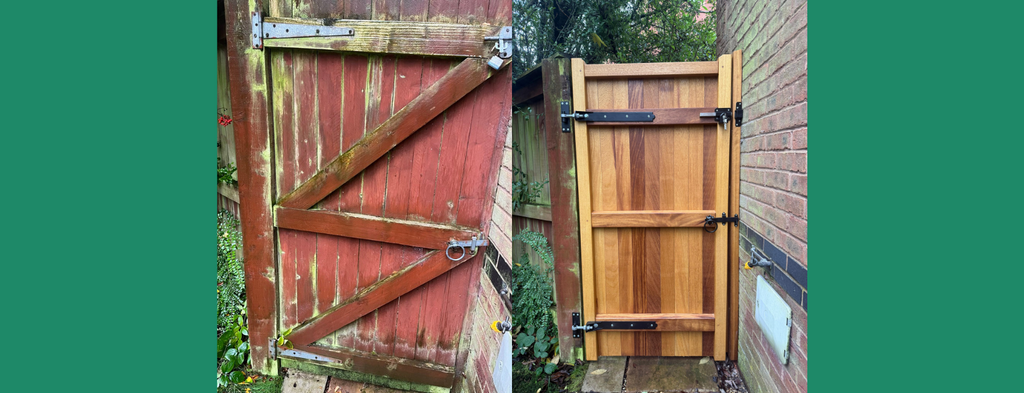
Overcoming Storm-Damaged Gates: Your Path to Restoration and Quality
Experts Answer: Exactly What Is the Best Paint for Wooden Gates?